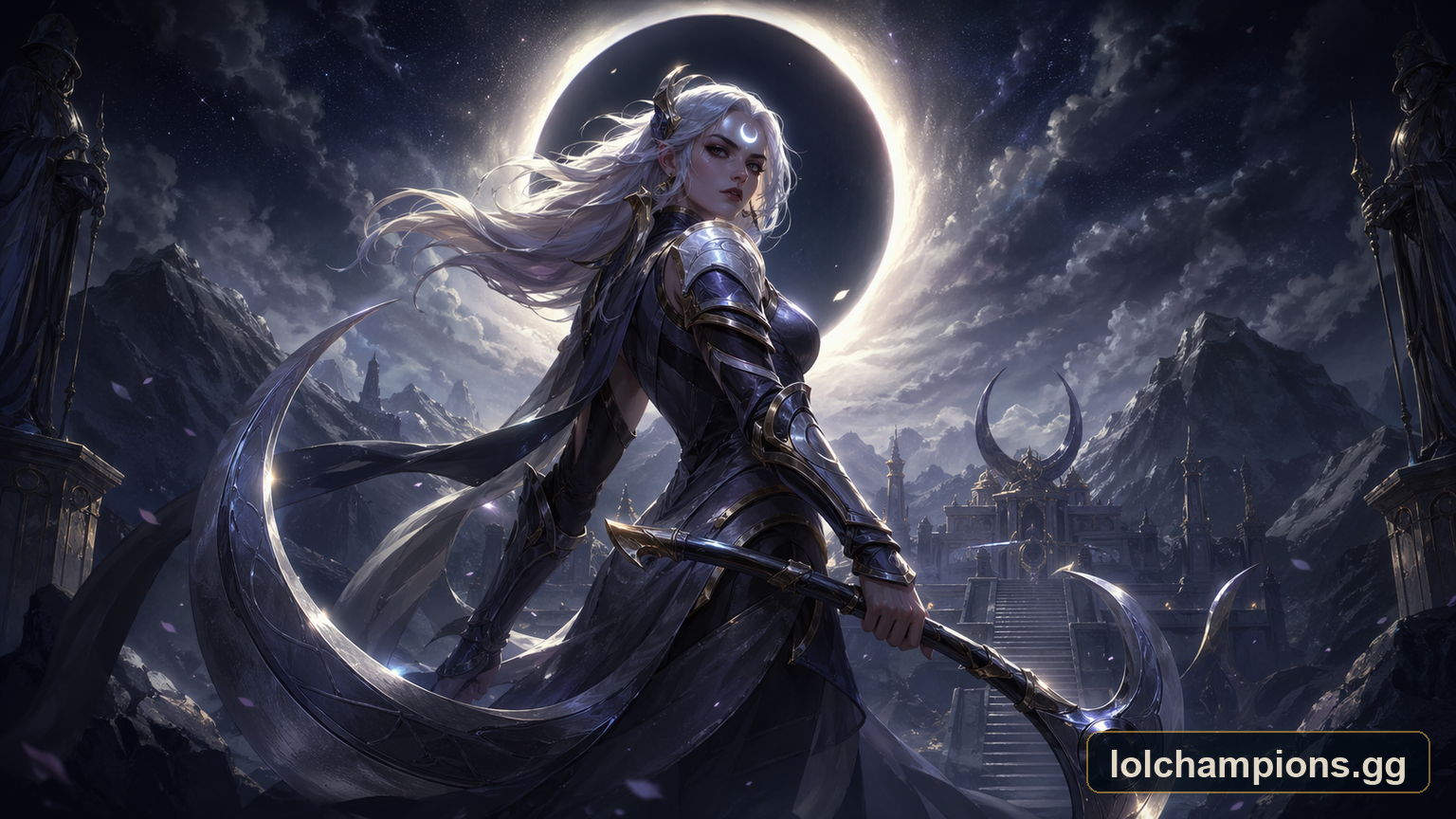
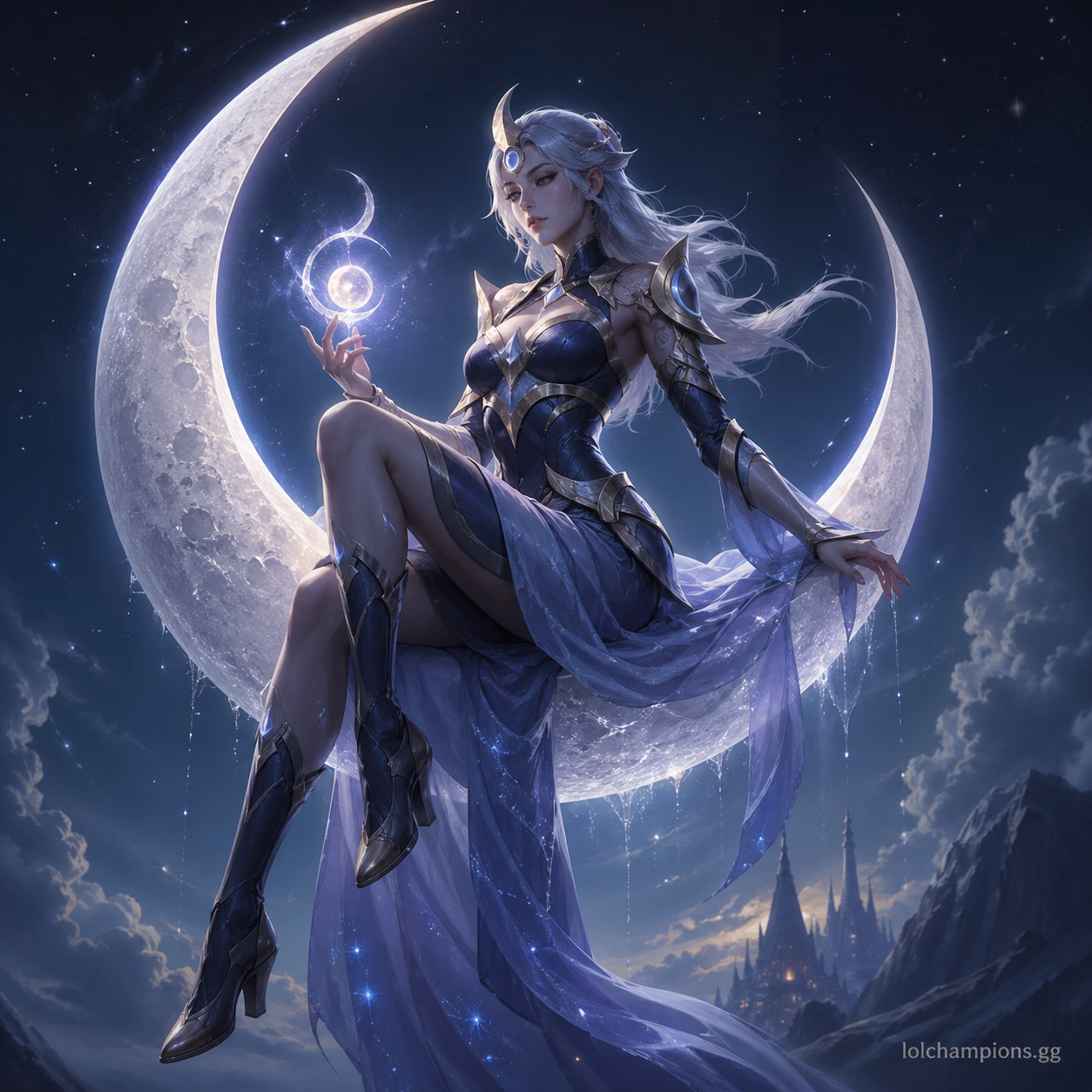
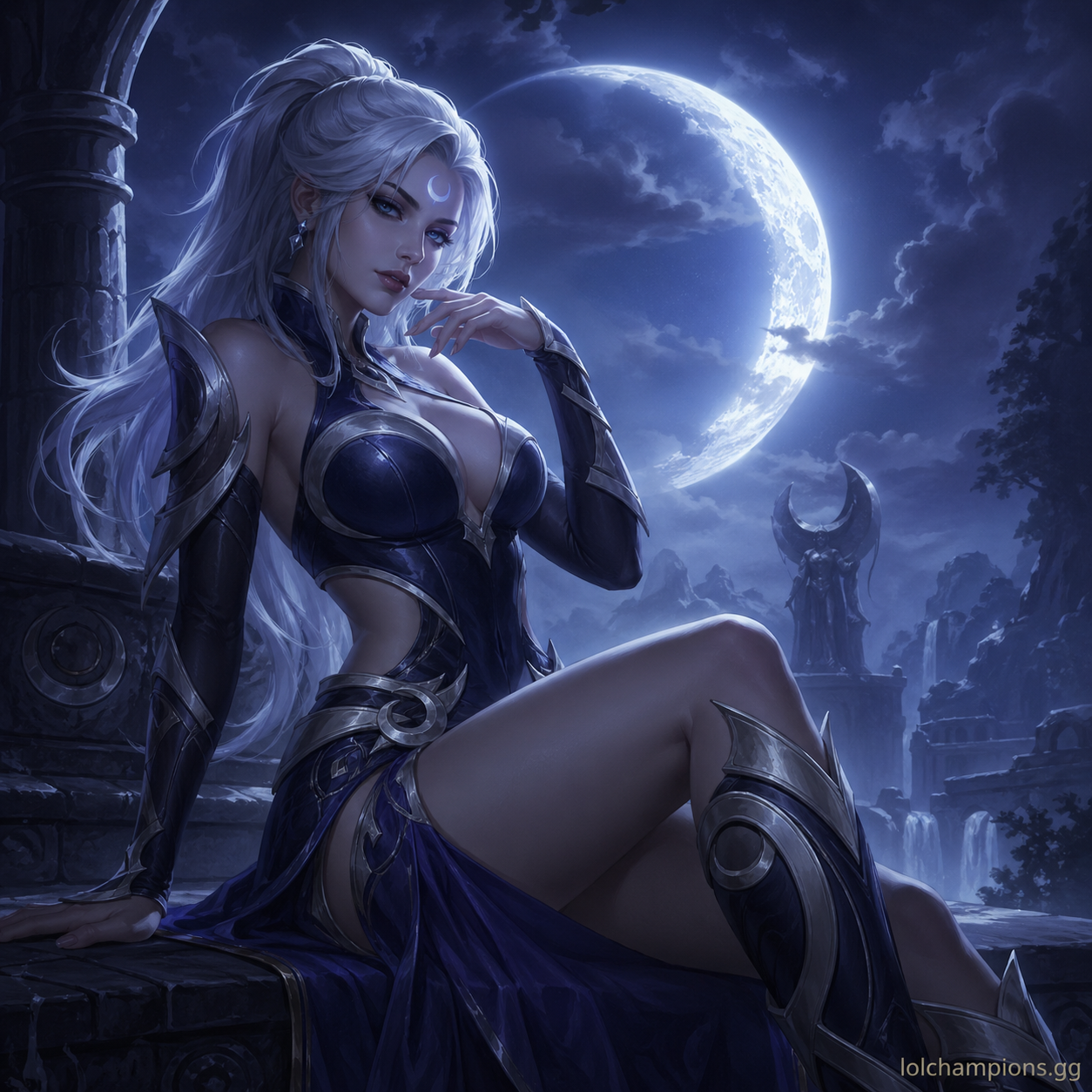
wallpaper






Diana
the Scorn of the Moon
Who Is Diana?
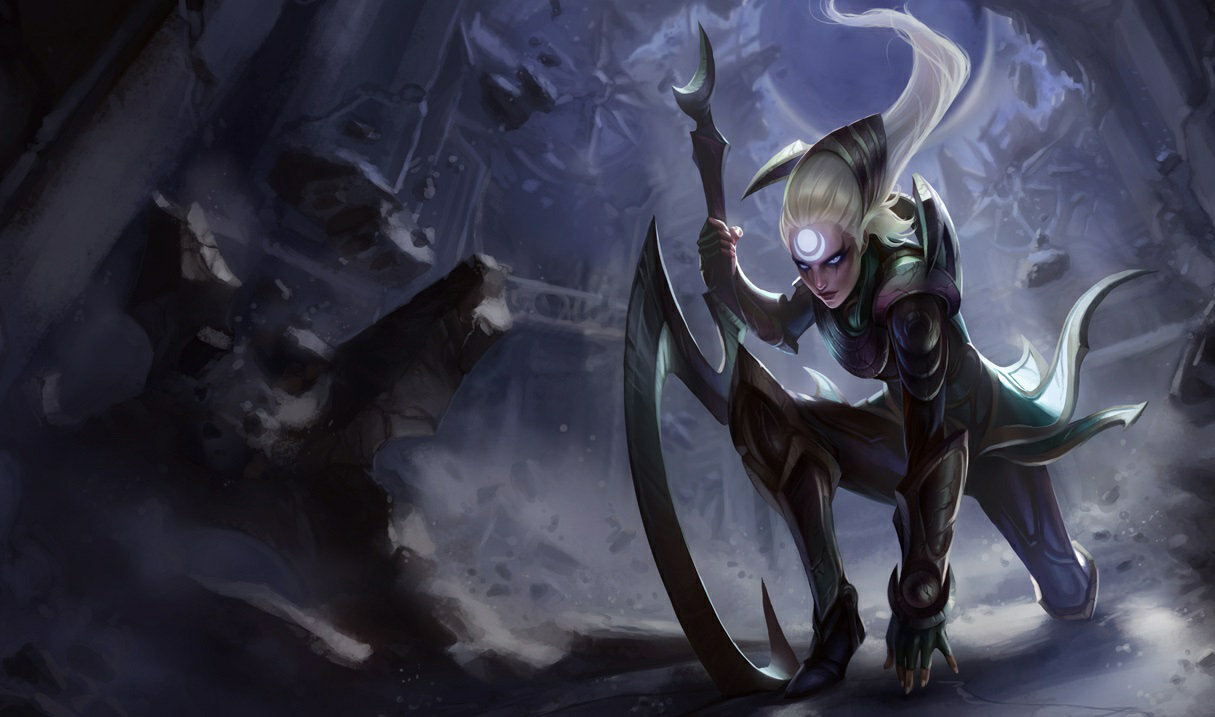
Bearing her crescent moonblade, Diana fights as a warrior of the Lunari—a faith all but quashed in the lands around Mount Targon. Clad in shimmering armor the color of winter snow at night, she is a living embodiment of the silver moon's power. Imbued with the essence of an Aspect from beyond Targon's towering summit, Diana is no longer wholly human, and struggles to understand her power and purpose in this world.
Diana, Scorn of the Moon belongs to the Targon story space. The important part of the lore is not only where Diana comes from, but what that origin asks the character to carry. Every champion in League is built around a readable fantasy; for Diana, that fantasy is shaped by identity, purpose, and the choice to become more than a simple archetype.
Diana's Story Themes
The core tension in Diana's story is identity, purpose, and the choice to become more than a simple archetype. That gives the character more weight than a simple class label. Diana may be tagged as a Fighter and Assassin champion, but the biography frames the character as someone with pressure behind every choice, whether that pressure comes from duty, instinct, memory, ambition, or survival.
This is why Diana works as more than a splash art silhouette. The title "Scorn of the Moon" is the surface; underneath it is a character whose place in Runeterra creates questions fans can keep returning to: what the character wants, what the character fears, what they are protecting, and what might happen if they are pushed too far.
How The Lore Shows Up In Game
In game, Diana reads as direct, forceful, hard to ignore, and dangerous. The champion's stats lean into power, control, and spectacle, while the overall difficulty suggests a readable kit that lets the character fantasy come through quickly.
Diana's kit reinforces that identity through Moonsilver Blade, Crescent Strike, Pale Cascade, and Lunar Rush. Even before reading numbers or cooldowns, those names point back to the same fantasy the biography is building.
A useful gameplay clue from the champion data is: "Landing Crescent Strike is critically important, but don't be afraid to miss. The cooldown is short and the mana cost is low." That kind of advice matters because it shows how the story fantasy becomes practical behavior in a match.
Why Diana Stands Out
Diana stands out because the champion fantasy is easy to understand at a glance and still has room for interpretation. Some players connect with the gameplay pattern first. Others connect with the mood, the title, the region, or the unresolved questions in the biography.
That combination is what makes a good League champion page worth reading. The short official bio gives the canon foundation, but the expanded lore helps connect the dots: where Diana fits in Runeterra, what emotional theme drives the character, and why the same idea still matters when the match starts.
Diana, the Scorn of the Moon
Fighter · Patch 16.10.1 · Last updated 2026-05-21
Diana, the Scorn of the Moon. Full Fighter guide for League of Legends: abilities, lore, skins, base stats, tips, and counter picks. Updated for patch 16.10.1.
Who Is Diana?
Bearing her crescent moonblade, Diana fights as a warrior of the Lunari—a faith all but quashed in the lands around Mount Targon. Clad in shimmering armor the color of winter snow at night, she is a living embodiment of the silver moon's power. Imbued with the essence of an Aspect from beyond Targon's towering summit, Diana is no longer wholly human, and struggles to understand her power and purpose in this world.
Diana, Scorn of the Moon belongs to the Targon story space. The important part of the lore is not only where Diana comes from, but what that origin asks the character to carry. Every champion in League is built around a readable fantasy; for Diana, that fantasy is shaped by identity, purpose, and the choice to become more than a simple archetype.
Diana's Story Themes
The core tension in Diana's story is identity, purpose, and the choice to become more than a simple archetype. That gives the character more weight than a simple class label. Diana may be tagged as a Fighter and Assassin champion, but the biography frames the character as someone with pressure behind every choice, whether that pressure comes from duty, instinct, memory, ambition, or survival.
This is why Diana works as more than a splash art silhouette. The title "Scorn of the Moon" is the surface; underneath it is a character whose place in Runeterra creates questions fans can keep returning to: what the character wants, what the character fears, what they are protecting, and what might happen if they are pushed too far.
How The Lore Shows Up In Game
In game, Diana reads as direct, forceful, hard to ignore, and dangerous. The champion's stats lean into power, control, and spectacle, while the overall difficulty suggests a readable kit that lets the character fantasy come through quickly.
Diana's kit reinforces that identity through Moonsilver Blade, Crescent Strike, Pale Cascade, and Lunar Rush. Even before reading numbers or cooldowns, those names point back to the same fantasy the biography is building.
A useful gameplay clue from the champion data is: "Landing Crescent Strike is critically important, but don't be afraid to miss. The cooldown is short and the mana cost is low." That kind of advice matters because it shows how the story fantasy becomes practical behavior in a match.
Why Diana Stands Out
Diana stands out because the champion fantasy is easy to understand at a glance and still has room for interpretation. Some players connect with the gameplay pattern first. Others connect with the mood, the title, the region, or the unresolved questions in the biography.
That combination is what makes a good League champion page worth reading. The short official bio gives the canon foundation, but the expanded lore helps connect the dots: where Diana fits in Runeterra, what emotional theme drives the character, and why the same idea still matters when the match starts.
Abilities
P: Moonsilver Blade
Every third strike cleaves nearby enemies for an additional magic damage. After casting a spell, Diana gains Attack Speed for 5 seconds.
Q: Crescent Strike
Unleashes a bolt of lunar energy in an arc dealing magic damage.Afflicts enemies struck with Moonlight, revealing them if they are not stealthed for 3 seconds.
W: Pale Cascade
Diana creates three orbiting spheres that detonate on contact with enemies to deal damage in an area. She also gains a temporary shield that absorbs damage. If her third sphere detonates, the shield gains additional strength.
E: Lunar Rush
Becomes the living embodiment of the vengeful moon, dashing to an enemy and dealing magic damage.Lunar Rush has no cooldown when used to dash to an enemy afflicted with Moonlight. All other enemies will have the Moonlight debuff removed regardless of whether they were the target of Lunar Rush.
R: Moonfall
Diana reveals and draws in all nearby enemies and slows them.If Diana pulls in one or more enemy champions, the moonlight crashes down onto her after a short delay, dealing magic damage in an area around her, increased for each target beyond the first pulled.
Diana Base Stats
- Health: 640 (+109/lv)
- Attack Damage: 57 (+0/lv)
- Armor: 31 (+4.3/lv)
- Magic Resist: 32 (+2.05/lv)
- Move Speed: 345
- Attack Range: 150
- Difficulty: 4 / 10
Tips for Diana
Playing as Diana
- Landing Crescent Strike is critically important, but don't be afraid to miss. The cooldown is short and the mana cost is low.
- Consider when to cast Lunar Rush without Moonlight and when to wait for another Crescent Strike.
- Use Moonfall and Lunar Rush to stay on targets and activate Moonsilver Blade for extra damage.
Playing against Diana
- Dodge Crescent Strike, or move to safety if you are affected by Moonlight.
- Pale Cascade orbs only last a few seconds. Avoid Diana and engage her after the shield dissipates.
- Diana can play very aggressively if she uses Lunar Rush without Moonlight, but you can punish her by slowing or stunning her when she has no way to get back into position.
Diana Counters
- Cassiopeia — 56.24% win rate (14,872 games)
- Lux — 54.39% win rate (13,967 games)
- Vladimir — 53.38% win rate (8,675 games)
- Aurora — 52.4% win rate (7,351 games)
- Anivia — 51.55% win rate (4,972 games)
Chat with this champion using AI →
Create your own AI version and bring them to life